



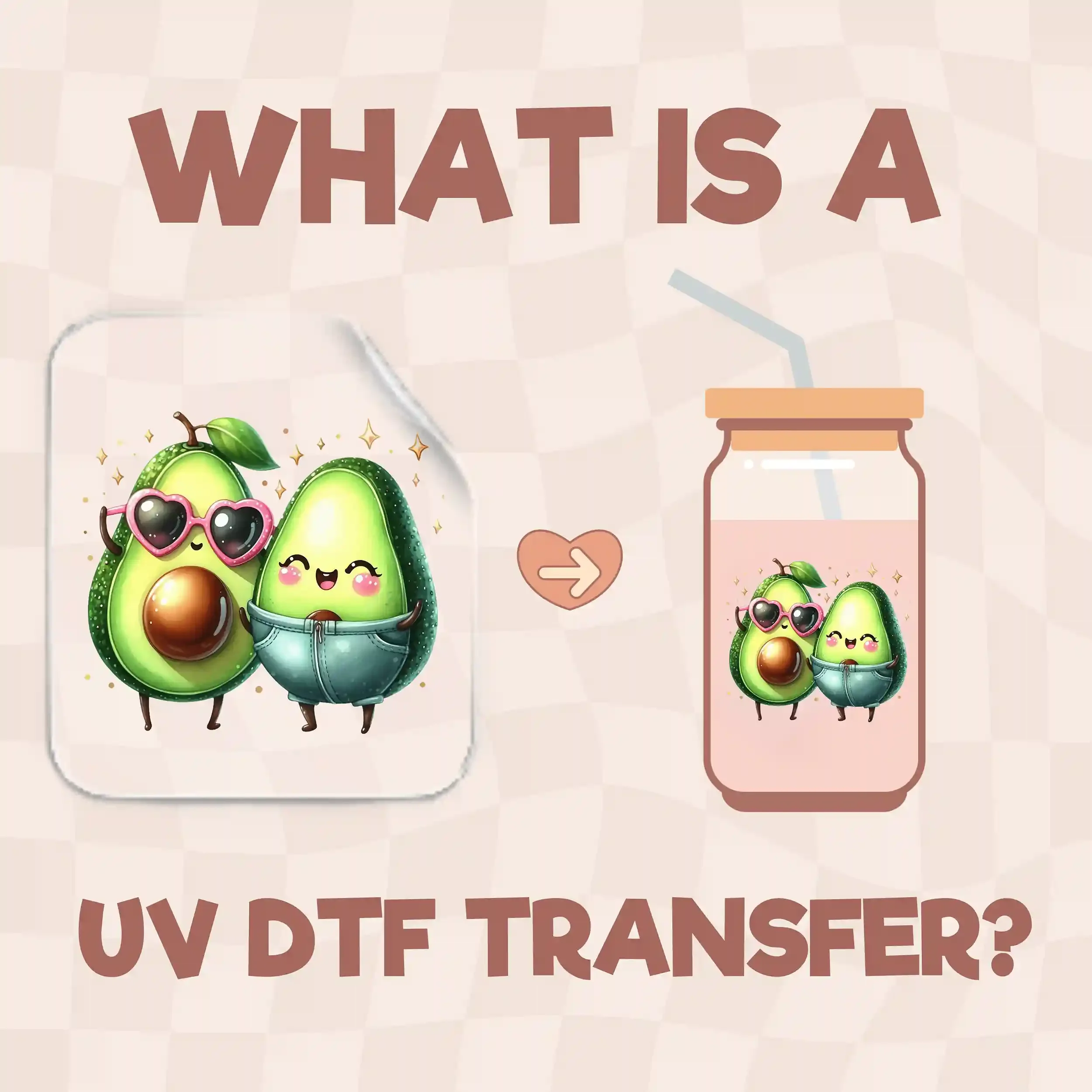
A UV DTF transfer is a UV-cured adhesive decal that applies to hard surfaces like glass, metal, plastic, and paper with no heat press required; unlike a regular DTF transfer, it is not made for fabric. Think of it as a permanent, scratch-resistant sticker: peel, stick, and rub it onto cups, tumblers, signs, and more. Here is how UV DTF works and how it differs from the DTF transfers you press onto shirts.
Well, for starters, UV DTF transfers don’t require heat and work like a permanent sticker. Though they’re not designed for fabric, the UV ink used in this process is specially formulated to resist fading and scratching, providing long-lasting results.
Definition of a UV DTF Transfer
UV DTF (Direct-To-Film) stickers indeed differ from traditional DTF transfers, as they are not intended for use on fabrics.
Instead, UV DTF stickers are printed using a UV DTF printer, which deposits UV-curable ink onto a film substrate. These stickers are versatile and can adhere to various surfaces such as paper, metal, plastic, and glass.
Now, here’s the thing; due to their composition and printing process, UV DTF stickers may not be suitable for fabric applications. Unlike traditional DTF transfers, which are designed specifically for garment decoration, UV DTF stickers are better suited for nontextile surfaces where durability and vibrant color reproduction are desired.
UV DTF Transfer vs. DTF Transfer
You can differentiate a UV DTF transfer from a traditional DTF transfer by three factors: the printing process, the materials used, and the intended applications, which we tackled earlier.
But in terms of the printing process and usage of materials for both methods, here’s how you can separate them:
1. UV DTF stickers are printed using a UV DTF printer, which utilizes UV-curable inks. On the other hand, traditional DTF transfers involve printing designs onto a special-release film using inkjet or solvent-based printers.
2. When it comes to materials used, UV DTF stickers are printed on AB film, a two-part film where the A film carries the design and the B film lets you rub the sticker onto the surface by hand. The film used for traditional DTF transfers is specifically designed for heat transfer onto fabrics.
A lot of people are unable to distinguish between UV DTF transfers and traditional DTF transfers. But we believe that the only thing you need to remember is the former is not applicable for fabric while the latter is primarily made for it.
Learn More: How Long Do DTF Transfers Last?
Tips for Achieving Optimal Results with UV DTF Transfers
Of course, we don’t want to leave you empty-handed on how you can achieve professional-looking and gorgeous results with UV DTF transfers. Here are some proven and tested tips for you!
-
Choose a quality artwork
-
Ensure a proper color calibration.
-
Try to test out different settings.
-
Prepare the substrate beforehand.
-
Peel the transfer carefully.
Practice is key! In no time, you can bring your designs to life with vibrant colors and exceptional quality with a UV DTF transfer.
Final Thoughts
UV DTF transfers can be a game-changer. We hope this short blog post has shed light on this exciting printing technique and inspires you to explore its possibilities.
Learn More: Best Way to Store DTF Transfers